
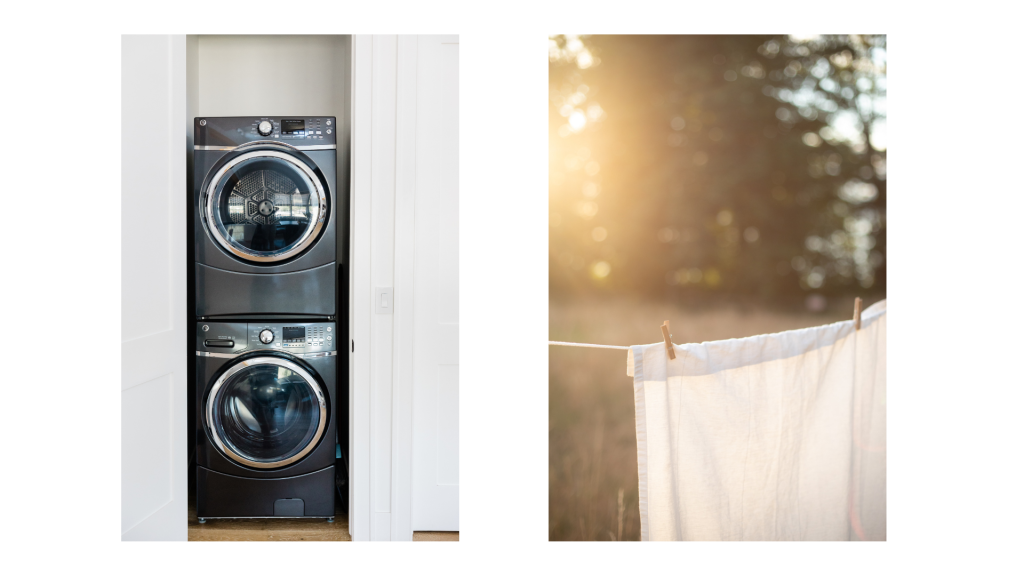
Choosing between air drying and machine drying can impact your clothes’ lifespan, energy use, and convenience. Each method has its benefits and drawbacks, so let’s break them down to help you decide the best option for your laundry routine.
Air Drying
✅ Pros:
- Eco-Friendly: Reduces energy use and carbon footprint.
- Gentler on Fabrics: Minimizes shrinkage, stretching, and fading.
- Cost-Effective: No electricity costs.
- Fresh Smell: Sun-dried clothes often smell fresh naturally.
❌ Cons:
- Takes Longer: Especially in cold or humid climates.
- Weather-Dependent: Not always practical during rainy seasons.
- Space Requirement: Needs room for clotheslines or racks.
- Stiffness: Clothes may feel rough without fabric softeners.
Machine Drying
✅ Pros:
- Quick and Convenient: Dries clothes fast.
- Weather-Proof: Works in all seasons and climates.
- Softens Fabrics: Reduces stiffness with heat and tumbling.
- Efficient for Heavy Loads: Ideal for large families.
❌ Cons:
- Energy-Intensive: High electricity usage.
- Fabric Damage: Can cause shrinking and wear.
- Higher Costs: Increased utility bills and maintenance.
- Lint Buildup: Requires regular cleaning for safety.
Which Should You Choose?
- For Delicates and Special Fabrics: Air drying is best.
- For Convenience and Speed: Machine drying wins.
- For Eco-Friendly Practices: Air drying is the top choice.
- For Large Loads Quickly: Use machine drying.
Best of Both Worlds: Combine Both Methods
- Air Dry First, Tumble Finish: Start with air drying and finish in the dryer for softness.
- Tumble First, Air Finish: Partially dry in the machine, then air dry to reduce heat damage.
Conclusion Both air drying and machine drying have their strengths. By balancing both methods based on your needs, fabric types, and environmental goals, you can enjoy fresh, long-lasting clothes while saving energy and money. Happy laundering!